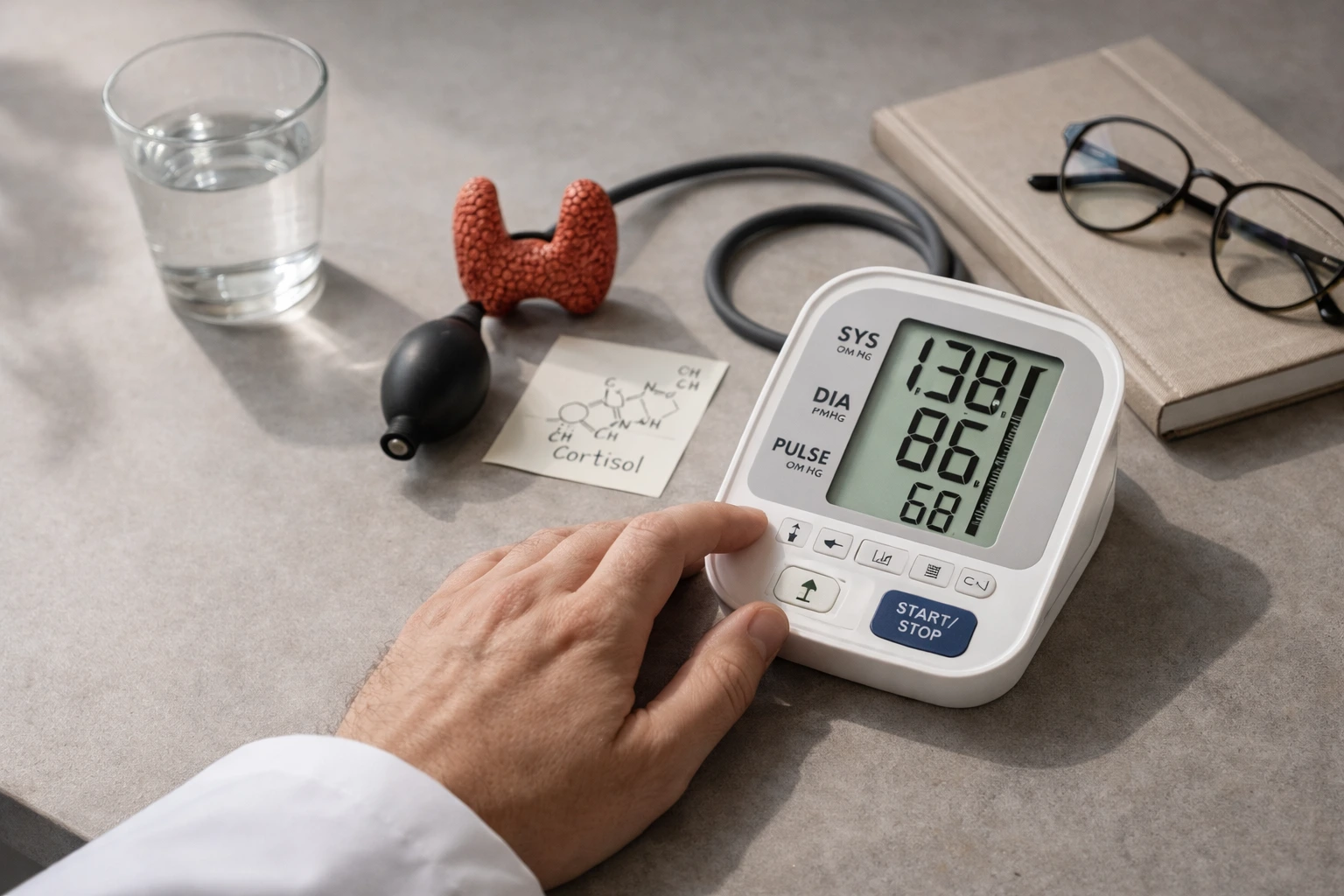
Blood pressure is usually associated with the heart and blood vessels. However, in reality, its regulation is a complex process in which the hormonal system plays a significant role.
That’s why sometimes the cause of high blood pressure is not lifestyle, stress, or diet, but disorders in the endocrine system.
How hormones affect blood pressure
The body has a complex system that regulates blood pressure — the renin–angiotensin–aldosterone system (RAAS). It works as an internal mechanism that helps maintain stable pressure.
Key components of this system:
- renin (produced by the kidneys) initiates the process of increasing blood pressure
- angiotensin II constricts blood vessels
- aldosterone retains sodium and water, increasing blood volume
In addition to RAAS, other hormones also influence blood pressure. For example, adrenaline and noradrenaline can sharply increase blood pressure in response to stress. Cortisol contributes to a more sustained increase, while thyroid hormones affect heart rate and vascular tone.
When to suspect a hormonal cause
Not all high blood pressure is the same. In approximately 5–10% of cases, hypertension has a secondary, meaning hormonal, cause.
Several signs may indicate this:
- high blood pressure at a young age
- sudden “spikes” in blood pressure
- poor response to standard medications
- additional symptoms such as sweating, palpitations, weight gain or loss
If you recognize some of these signs, it may be worth considering a hormonal cause.
The most common hormonal causes of hypertension
Among the most common conditions:
- hyperaldosteronism
- thyroid disorders
- Cushing’s syndrome
- pheochromocytoma
These conditions require a specific diagnostic and treatment approach.
Why this matters
If the cause of high blood pressure is hormonal, standard antihypertensive medications may be less effective.
In such cases, it is important not only to lower blood pressure but also to identify and treat the underlying cause. This is what leads to long-term control.
What to do if a hormonal cause is suspected
You should not try to determine the cause on your own. Diagnostics are always individualized and may include:
- hormone blood tests
- imaging studies (ultrasound, CT, or MRI — if needed)
A structured and medically guided approach is essential to avoid delays and complications.
When a consultation is enough and when it’s not
In many cases, the first step can be a consultation with a doctor, which helps assess symptoms and determine whether a hormonal cause is likely.
If blood pressure is unstable, rises sharply, or is accompanied by other symptoms, more detailed diagnostics may be required.
With Remed, you can get an online consultation with a family doctor, endocrinologist, or cardiologist to quickly assess your condition and understand what tests you may need.
Conclusion
Blood pressure is not only about the heart and blood vessels. In some cases, its increase is linked to hormonal causes that need timely identification.
The earlier the cause is identified, the more effective the treatment and control of blood pressure.















 We use cookies