A feeling of heaviness in the legs at the end of the day, swelling, or visible veins — these are things many people tend to ignore at first. It often seems like just fatigue or the result of a long day on your feet. But over time, these symptoms can become more noticeable and may not go away on their own.
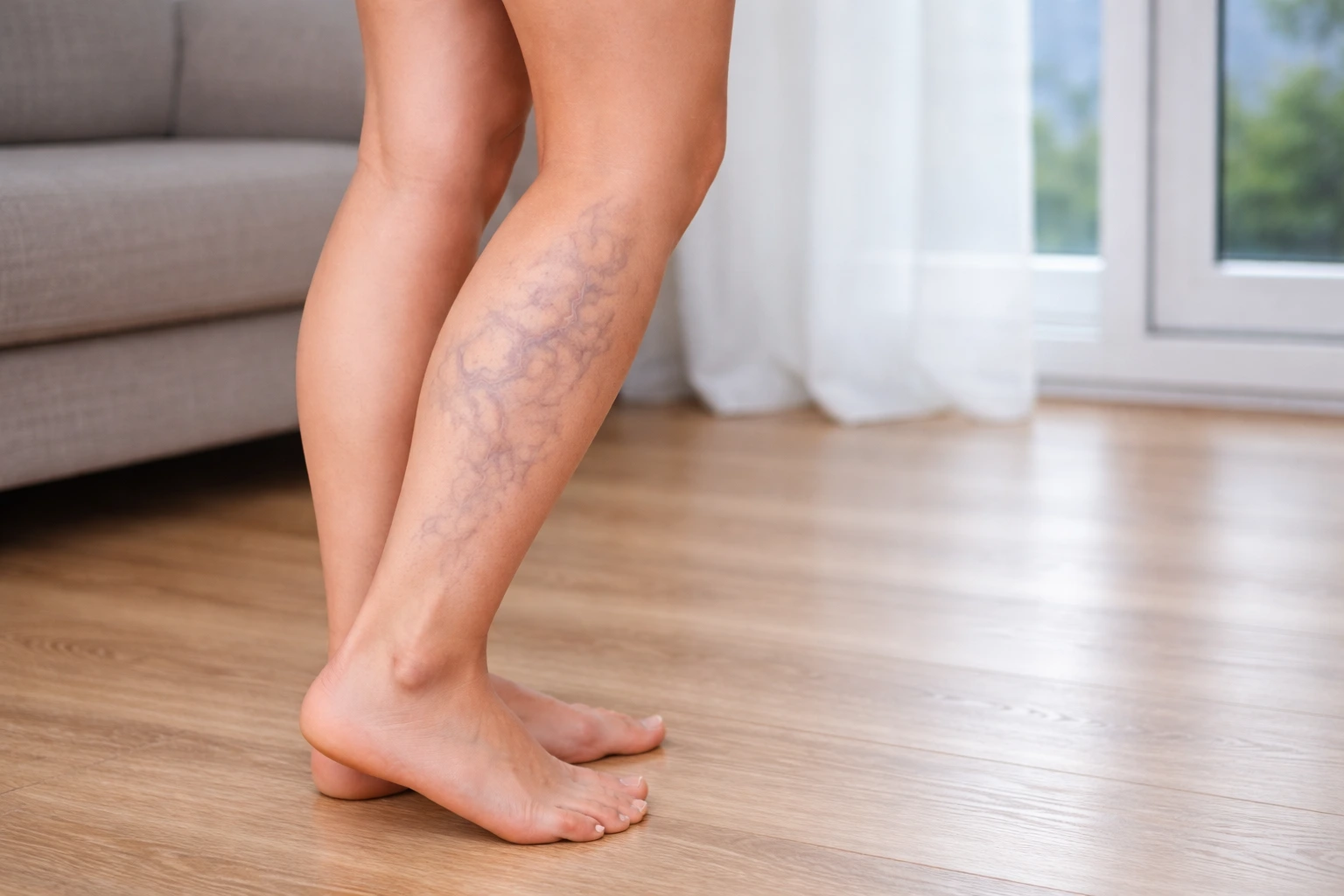
Varicose veins are a condition in which normal blood flow is disrupted, causing blood to pool in the veins. As a result, veins become enlarged, visible under the skin, and may cause discomfort or pain.
This is not just a cosmetic issue, but a condition that can progress if left untreated.
Why do varicose veins develop?
The main cause of varicose veins is improper functioning of venous valves, which are responsible for moving blood upward against gravity.
When these valves weaken, blood begins to accumulate in the veins, increasing pressure on their walls. Over time, this leads to vein enlargement.
Several factors increase the risk: genetics, sedentary lifestyle, prolonged standing or sitting, excess weight, hormonal changes, and pregnancy.
Symptoms of varicose veins
Symptoms often develop gradually and may be mild at first, but become more noticeable over time:
- heaviness in the legs
- swelling, especially in the evening
- visible veins or spider veins
- aching or burning sensation
- leg cramps, especially at night
- fatigue in the legs
Even mild symptoms can be an early sign of varicose veins.
Why are varicose veins dangerous?
If left untreated, varicose veins can progress and lead to complications such as chronic venous insufficiency, thrombosis, or inflammation of the veins.
In some cases, skin changes or ulcers may develop. That’s why varicose veins should not be treated as only a cosmetic concern.
Diagnosis
Diagnosis begins with a medical examination. The doctor evaluates symptoms, vein condition, and risk factors.
The most common test is an ultrasound (Doppler scan), which allows assessment of blood flow and vein function.
Treatment of varicose veins
Treatment depends on the stage of the condition. In early stages, it may include lifestyle changes, physical activity, and compression therapy.
In more advanced cases, modern minimally invasive procedures may be recommended.
It’s important to understand that treatment is always individualized.
When to see a doctor and whether a consultation is enough
If you notice heaviness in your legs, swelling, or visible veins, it’s already a reason to pay attention. Especially if symptoms are recurring or getting worse.
In the early stages, it’s often enough to start with a consultation to assess the situation and understand whether further tests are needed.
If symptoms become more severe, pain appears, or skin changes occur, a full medical evaluation is necessary.
Conclusion
Varicose veins often start subtly but can significantly affect quality of life over time.
With Remed, you can get an online consultation with a doctor to assess symptoms, understand risks, and receive guidance on next steps.













 We use cookies