Acne is not only a teenage problem. In many cases, breakouts are directly related to hormonal changes in the body. This is why acne can appear in adulthood, even if the skin was previously clear.
Hormonal acne develops when there is an imbalance in hormone levels, particularly androgens such as testosterone. These hormones stimulate the sebaceous glands to produce more sebum, which leads to clogged pores and inflammation.
As a result, a cycle forms: excess sebum → clogged pores → bacterial growth → inflammation → breakouts.
How do hormones affect the skin?
The skin is highly sensitive to hormonal fluctuations. Sebaceous glands contain receptors that respond to hormones, which means even minor changes can influence their activity.
When androgen levels increase or the balance between estrogen and progesterone shifts, sebaceous glands produce more sebum. At the same time, the process of skin cell turnover is altered, causing dead skin cells to accumulate and block pores together with oil.
This mechanism underlies most cases of hormonal acne.
When does hormonal acne most commonly occur?
Hormonal fluctuations can occur at different stages of life, so acne is not limited to a specific age group.
It is most common during adolescence, when hormone levels rise rapidly. In women, acne is often linked to the menstrual cycle, with breakouts worsening before menstruation due to hormonal shifts.
Hormonal acne may also occur during pregnancy, after stopping hormonal contraception, in conditions such as polycystic ovary syndrome (PCOS), or during menopause.
This explains why hormonal acne often follows a cyclical pattern.
What does hormonal acne look like?
Hormonal acne has certain characteristics that distinguish it from other types of acne.
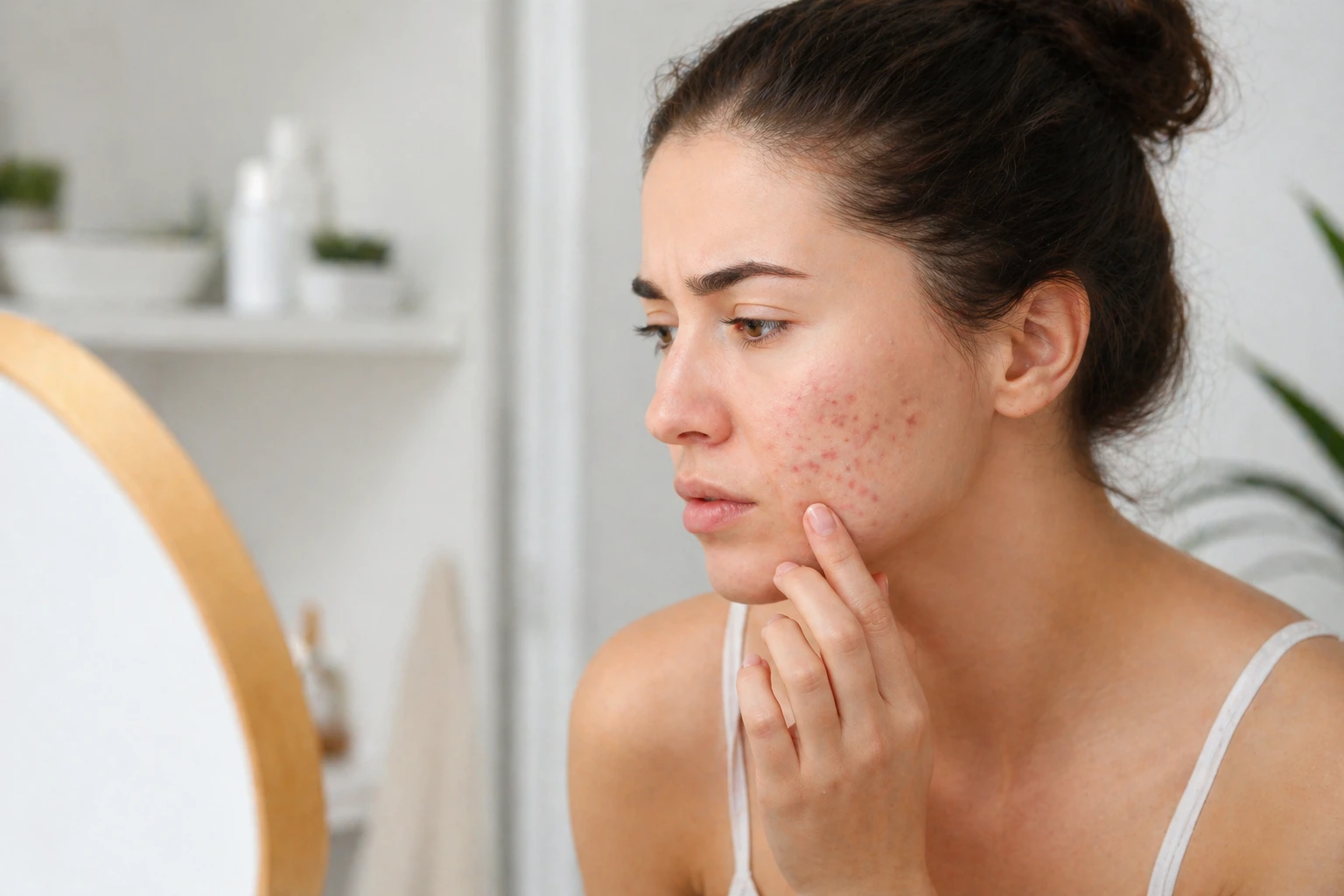
It most commonly appears in the lower part of the face — around the chin, jawline, and neck. The lesions are often deeper, more painful, and prone to inflammation.
These breakouts may include blackheads, closed comedones, or more severe forms such as nodules and cystic acne.
Such lesions may leave marks or scars if not treated properly.
The role of skin type
Skin type also influences how acne develops and presents.
Oily skin is associated with more active sebaceous glands, increasing the likelihood of clogged pores. Combination skin may experience breakouts in specific areas, while dry skin tends to have less oil production but can still be prone to irritation and inflammation.
However, it is important to understand that hormonal changes can trigger acne regardless of skin type.
Skin type affects the presentation, but it is not the primary cause.
Why can acne appear in adulthood?
Hormonal acne is often associated with adolescence, but it is increasingly common in adults.
This is partly due to chronic stress, which affects hormonal balance, as well as lifestyle factors, diet, and underlying endocrine conditions.
Certain medications or health conditions can also alter hormone levels and contribute to breakouts.
Therefore, acne in adulthood is not just a cosmetic issue but may reflect underlying physiological changes.
Why does it matter?
Hormonal acne is not only about appearance.
Chronic inflammation can lead to scarring, hyperpigmentation, and a significant impact on quality of life. In some cases, acne may be a sign of underlying hormonal disorders that require medical evaluation.
Ignoring persistent breakouts may lead to a chronic course and complications.
What to do?
Management of hormonal acne depends on the underlying cause and may involve both skincare and medical evaluation.
It is important to use appropriate skincare products, avoid overly aggressive treatments, and not traumatize the skin.
In some cases, consultation with a healthcare professional is necessary to assess hormonal balance and determine appropriate treatment options.
Early intervention helps reduce inflammation and prevent long-term skin damage.
Conclusion
Hormonal acne is the result of a complex interaction between hormones, skin physiology, and lifestyle factors.
Understanding its causes allows not only to treat symptoms but also to address the underlying mechanisms of breakouts.
What to do next?
If breakouts are persistent, cyclical, or not improving over time, it is important to seek professional advice.
With Remed, you can get an online consultation with a doctor, assess your condition, evaluate hormonal factors, and receive personalized recommendations.















 We use cookies